Southern Right Whales — The Gentle Giants of Hermanus
Every year, from June to November, the calm blue waters of Walker Bay in Hermanus become a playground for the Southern Right Whales. These magnificent ocean giants migrate thousands of kilometers to our coastline, transforming Hermanus into one of the world’s top whale-watching destinations.
Let’s dive into the fascinating world of these gentle giants — how to recognize them, where they live, and what makes Hermanus their favorite holiday home.
Where Do Southern Right Whales Live and Feed?
Southern Right Whales (Eubalaena australis) are found in the Southern Hemisphere, mainly around the coasts of South Africa, Argentina, Australia, and New Zealand. They migrate between two distinct habitats:
-
Feeding Grounds:
During the summer months (mainly December to May), Southern Right Whales live in the cold, nutrient-rich waters of the Southern Ocean near Antarctica. Here, they feed on vast swarms of tiny crustaceans called krill and copepods — filtering them through their baleen plates. This high-fat diet helps them build the thick layer of blubber that sustains them during their long migration north. -
Breeding Grounds:
In winter and spring (June to November), they migrate north to warmer coastal waters — like Walker Bay in Hermanus, South Africa — to mate, calve, and nurse their young. These bays offer calm, sheltered conditions that are perfect for mothers and their calves to rest and grow.
That’s why Hermanus has become world-famous: it’s not just a feeding stop — it’s a whale nursery!
How to Identify a Southern Right Whale
These whales are among the easiest to identify, thanks to four distinct features:
1️⃣ Large, rounded bodies (up to 16 meters long!)
2️⃣ No dorsal fin — their smooth backs glide effortlessly through the sea.
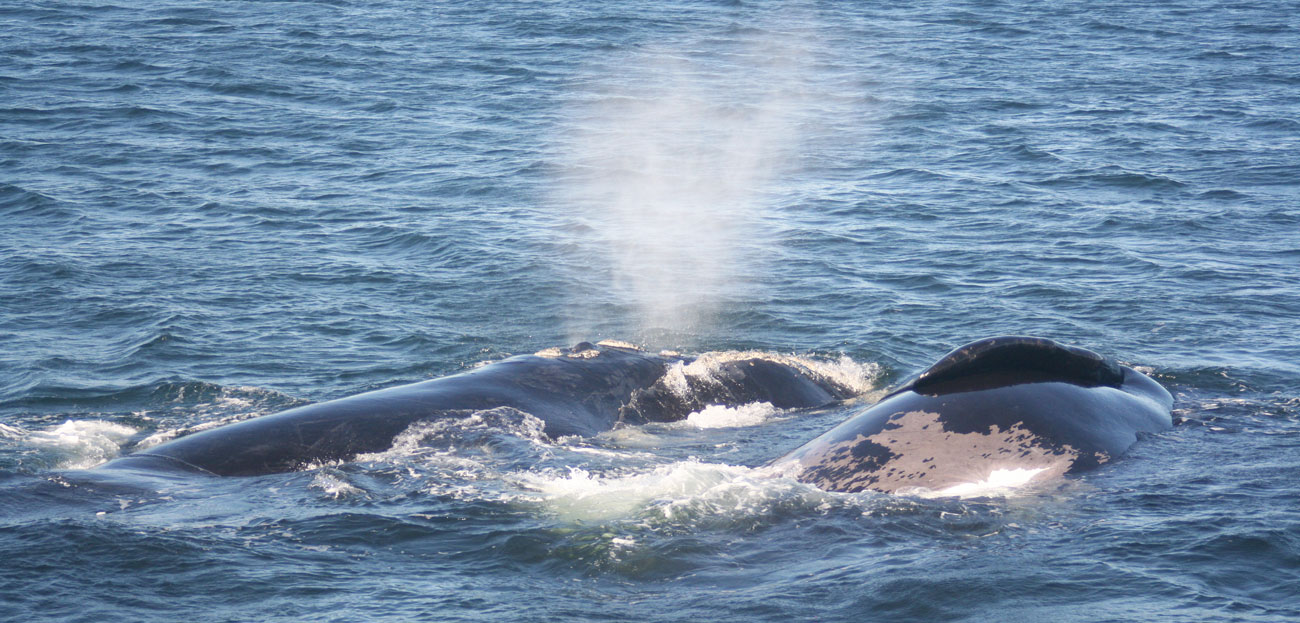
3️⃣ V-shaped blow — caused by their dual blowholes, shooting mist up to 5 meters high.
4️⃣ White callosities on their heads — unique rough patches that act like fingerprints for individual whales.
You can often spot them from the Hermanus cliffs or up close on a Hermanus Whale Watchers boat tour.
Fascinating Facts About Southern Right Whales
🐋 1. They’re slow swimmers — but graceful.
Southern Right Whales cruise at around 6 km/h, perfect for whale watching and photography!
🐋 2. Each whale has a unique callosity pattern.
Researchers use these markings to track individual whales year after year.
🐋 3. They’re social and playful.
You’ll often see them breaching, tail-slapping, and even “sailing” — lifting their tail high into the wind like a flag!
🐋 4. Calves drink over 100 liters of milk per day.
It’s packed with fat to help them grow quickly in the chilly ocean.
🐋 5. They were once nearly hunted to extinction.
The name “right whale” came from early whalers who thought they were the “right” ones to hunt because they floated after death. Thankfully, they’ve been protected since 1935 and are making a steady comeback.
Whale Watching in Hermanus
Seeing a Southern Right Whale in the wild is an experience you’ll never forget. Whether from the cliffs or a boat-based tour,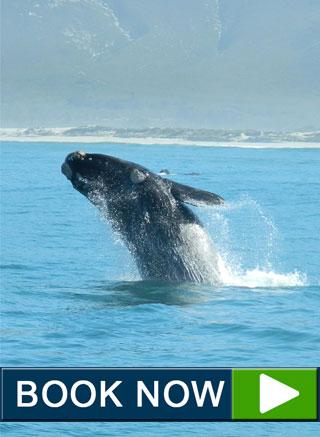 the sight of these enormous creatures gliding, breaching, or nursing their calves is pure magic.
Join Hermanus Whale Watchers for a front-row seat to the ocean’s greatest show. Our experienced crew ensures a safe, educational, and eco-friendly experience — where respect for the whales always comes first. 🌊
📍 Departures daily from Hermanus Harbour (weather permitting)
🎟️ Book your whale watching tour: www.hermanuswhalewatchers.co.za
📲 WhatsApp: +27 82 931 8064
From the icy waters of Antarctica to the sheltered bays of Hermanus — the Southern Right Whale’s journey is one of the ocean’s greatest migrations. Come witness it for yourself, and see why Hermanus remains the beating heart of South Africa’s whale coast.