Humpback Whales in Hermanus: What You Need to Know

“Humpback” refers to the habit of raising and curving its back in preparation for the dive, accentuating the pronounced hump in front of the dorsal fin.

The humpback whale is a baleen whale and a rorqual whale with a rounded body narrowing to a slender tail. The bulky head and jaws have numerous knobs that contain hair follicles and provide sites for barnacles and whale lice.

Humpback Whales are easily distinguished by their wing-like flippers often as long as up to a third of their total body length.

Join us for a Whale Watching tour in Hermanus…. and maybe you can spot a Humpback Whale in Walker Bay.
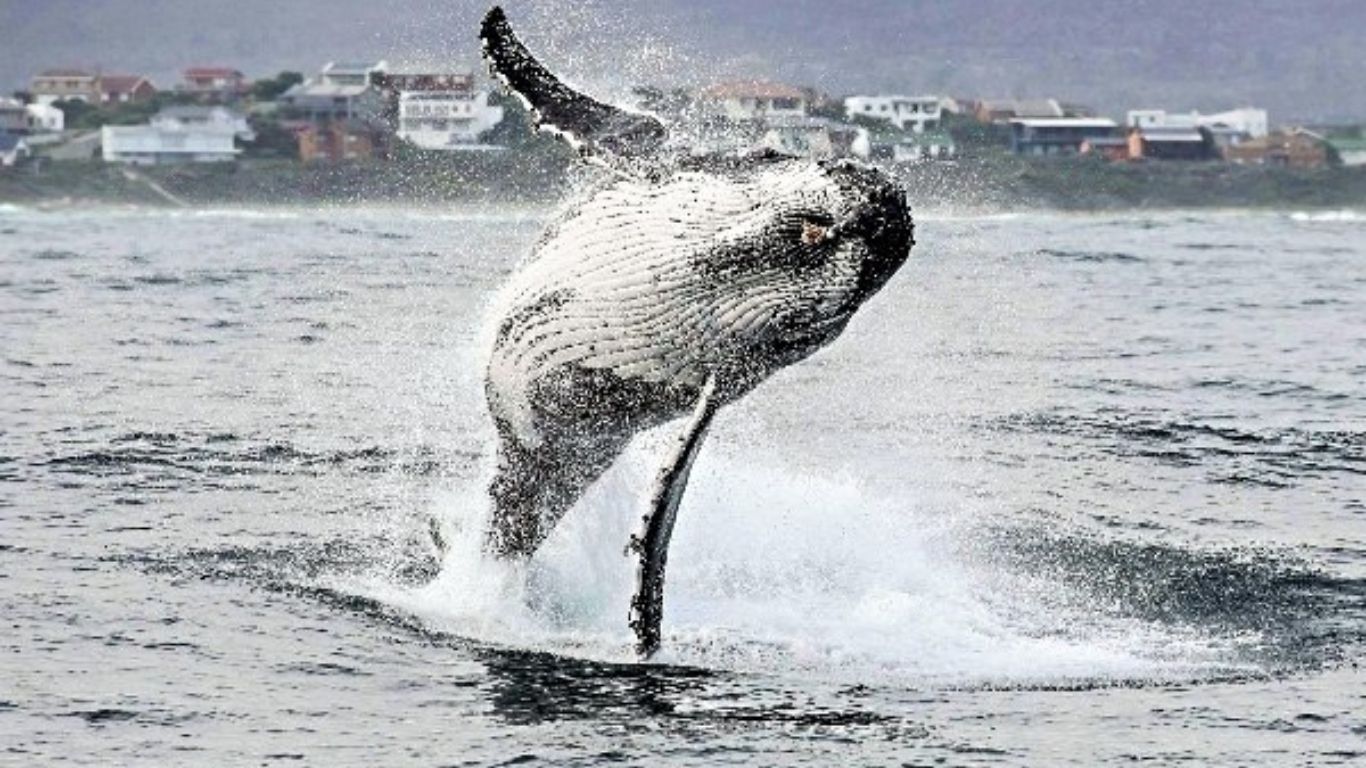
Humpback Whale breach

Quick Facts about Humpback Whales

  • “Humpback” refers to the habit of raising and curving its back in preparation for the dive, accentuating the pronounced hump in front of the dorsal fin.
  • The humpback whale is a baleen whale and a rorqual whale with a rounded body narrowing to a slender tail. The bulky head and jaws have numerous knobs that contain hair follicles and provide sites for barnacles and whale lice.
  • Humpback Whales are easily distinguished by their wing-like flippers often as long as up to as much as a third of their total body length.
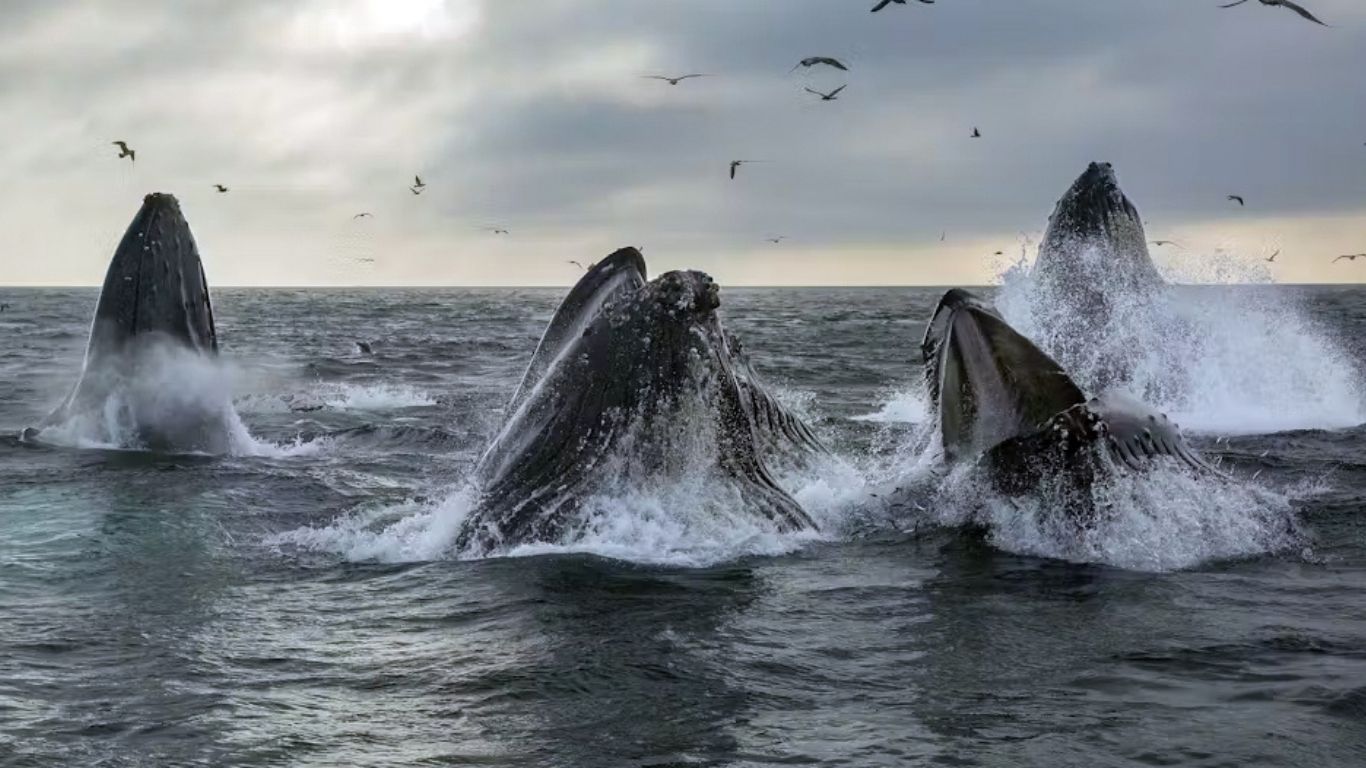
Humpback whale feeding

Did you know the humpback whale gets its name from the distinctive hump that appears just before it makes a deep dive? This beautiful arch of the back is one of the most iconic whale-watching moments at sea.

Humpbacks are baleen whales and part of the rorqual family, with rounded bodies that taper into a powerful, slender tail. Their bulky heads are covered in unique knobs called tubercles, which contain hair follicles and often host barnacles and whale lice — nature’s own little hitchhikers.

One of their most recognisable features? Those incredibly long, wing-like pectoral flippers, which help them glide, turn, and perform their famous ocean acrobatics.

Frequently Asked Questions about Humpback Whales

Because of the noticeable hump that forms in front of the dorsal fin when the whale arches its back before diving.

It is a baleen whale and belongs to the rorqual family.

By its very long, wing-like pectoral flippers and knobbly head.

They are called tubercles — each contains a hair follicle and often hosts barnacles.

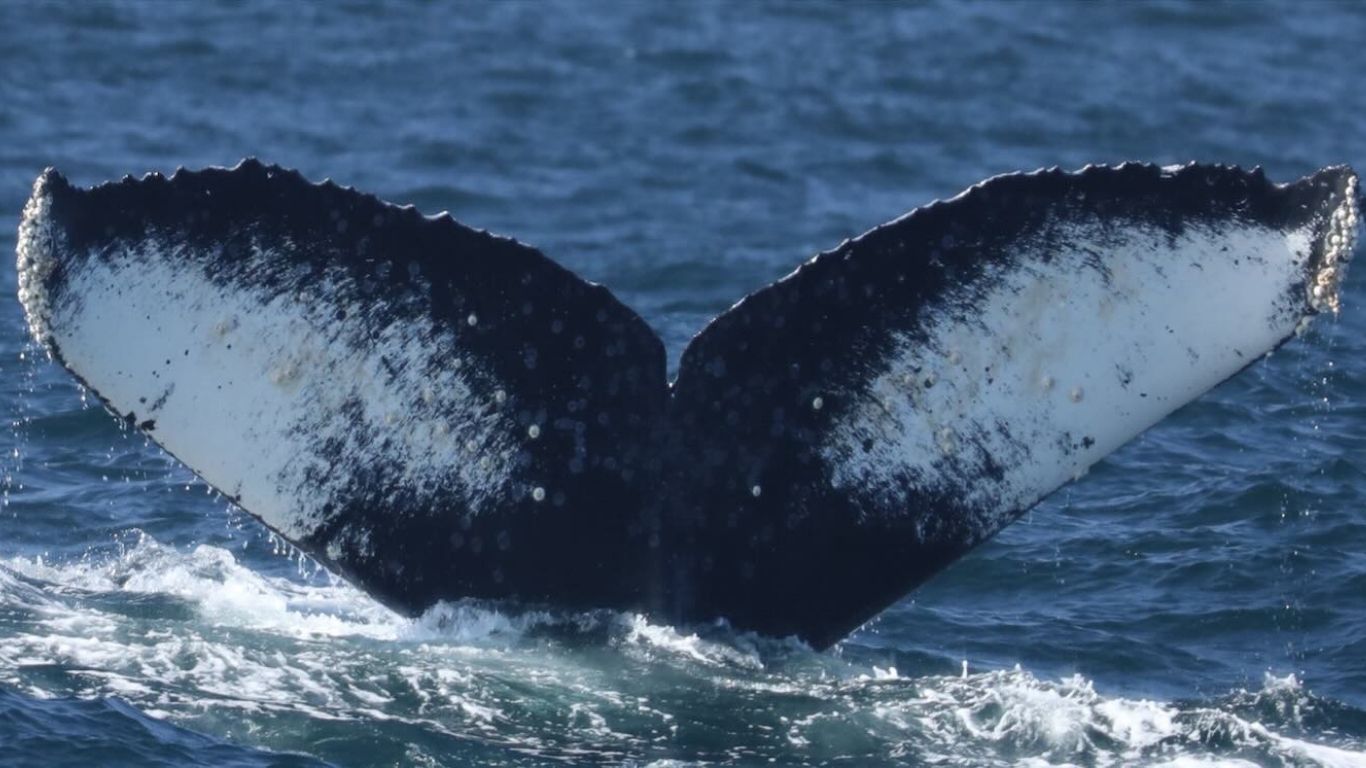
Humpback whale Tail grooves

Humpback Whales in Hermanus Summary

Humpback whales are among the most recognisable and beloved giants of the ocean, admired for their graceful movements, haunting songs, and spectacular surface behaviours. Named for the distinctive hump that appears when they arch their backs before a deep dive, these baleen whales belong to the rorqual family and are found in oceans around the world, including South African waters.

One of the humpback whale’s most striking features is its exceptionally long, wing-like pectoral flippers, which can grow up to one-third of its body length. These powerful flippers help the whale manoeuvre through the water and perform the dramatic breaches and fin slaps that thrill whale watchers. The knobbly bumps on the head, known as tubercles, contain hair follicles and often host barnacles, giving each whale a unique appearance.

Humpback whales migrate vast distances each year between feeding and breeding grounds, passing the Cape Whale Coast during seasonal movements. Their presence is an exciting highlight for marine enthusiasts and a reminder of the rich biodiversity found along the Hermanus shoreline.

Book your Whale Watching trip today
Shares