The Humpback whale is called a humpback because of the protruding hump in front of the dorsal fin, most visible when the whale raises and curves its back before a deep dive.
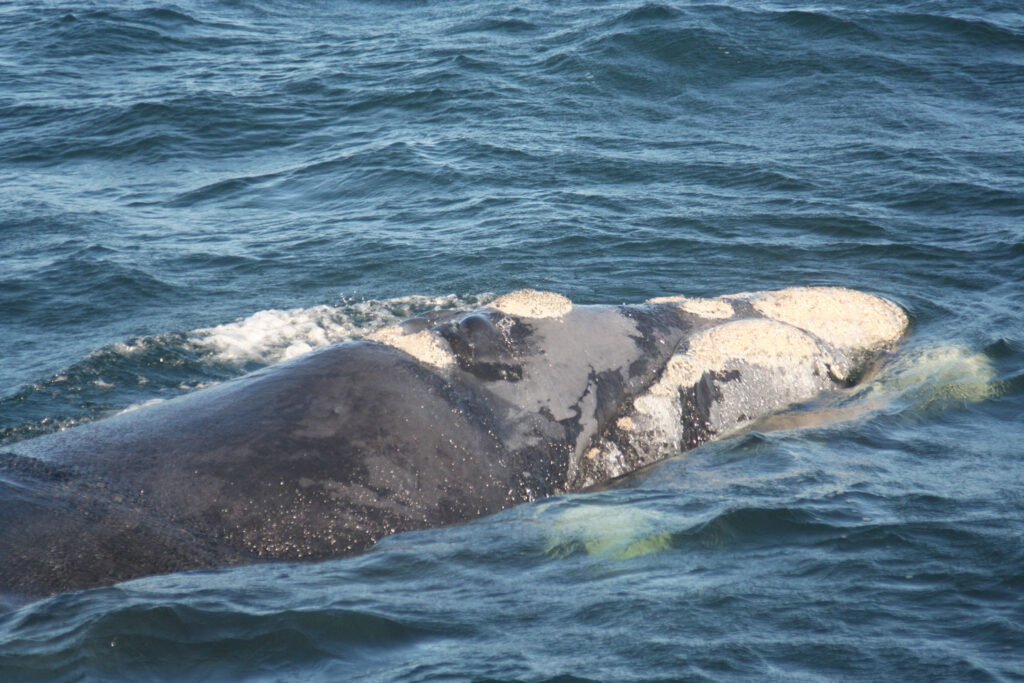
The humpback whale is a baleen whale and a rorqual whale with a rounded body narrowing to a slender tail. The bulky head and jaws have numerous knobs that contain hair follicles and provide sites for barnacles and whale lice.
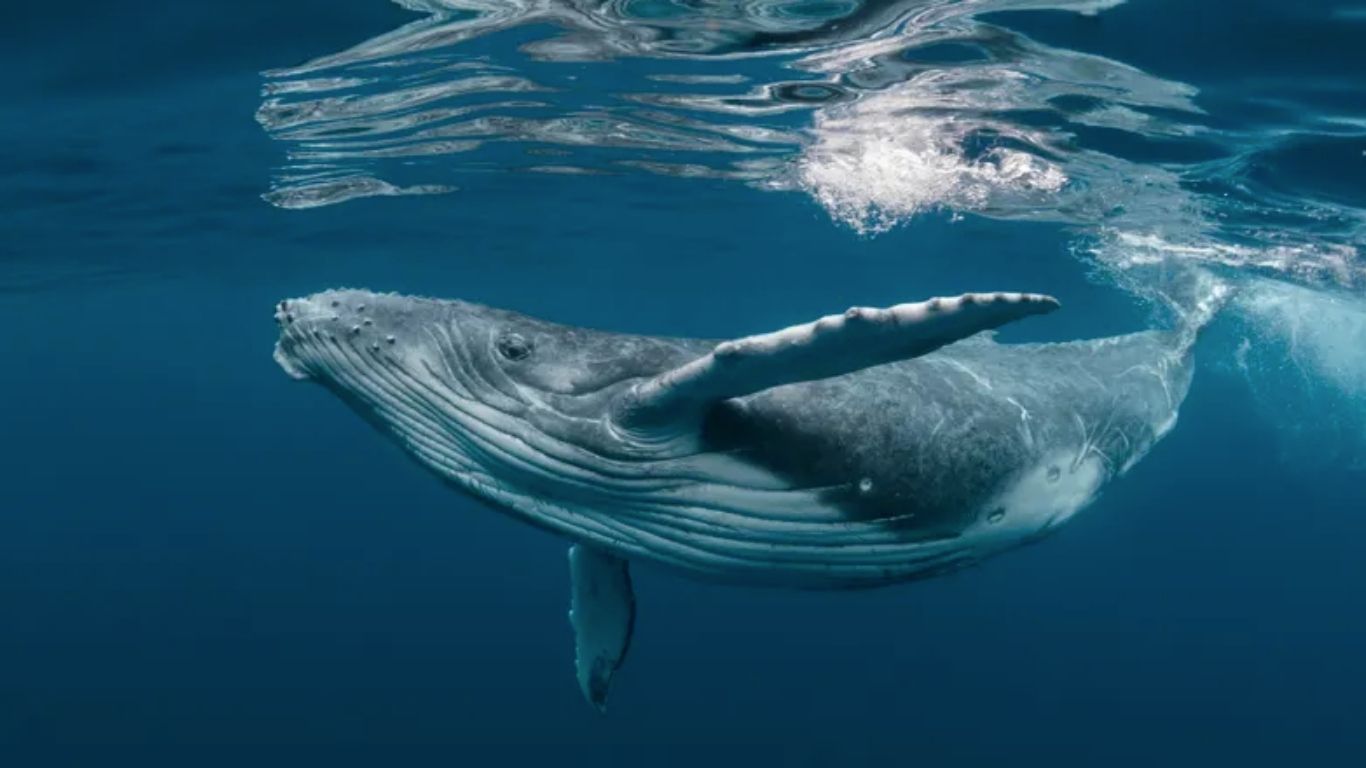
Humpback Whales can easily be recognised because of their slender wing-like flippers called pectoral flippers.
Join us for a Whale Watching tour in Hermanus…. and maybe you can spot a Humpback Whale in Walker Bay.
Humpback whale Facts

7 Wonderful Humpback Whale Facts
- The Humpback’s Latin designation Megaptera novaeangliae translates
- “the great winged newfoundlander,” indicating the whale’s huge wing-like flippers.
- Barnacles form on the Humpback’s body, giving them their bearded appearance.
- Humpbacks make a long migration twice every year. They travel to cooler
- polar water summers to feed, then to warmer tropical waters in the winter to breed.
- A Humpback’s song can be heard from as far as almost 20 km away.
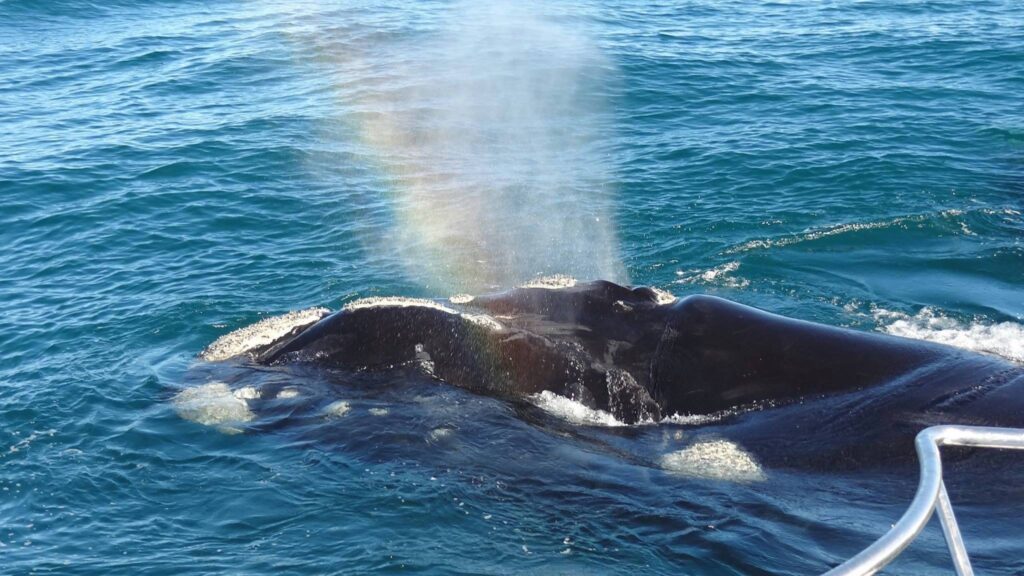
- A Humpback’s spouting can reach as high as 3 metres and can be heard
- as far as 245 metres away.
- When getting ready to make a deep dive Humpbacks will arch or hump their backs,
- which is how they earned their everyday name.
- A Humpback Whale’s heart can reach almost 200 kg in weight
- the equivalent of 3 fully grown men.

FAQ | Frequently Asked Questions about Humpback Whales
Humpback whales use baleen plates instead of teeth to filter food. These plates are made of keratin—the same protein found in human hair and nails. After engulfing a massive volume of water through their expanded rorqual grooves, the whale uses its tongue to push the water out. The hairy fringe on the inside of the baleen plates traps small prey like krill and small schooling fish while allowing the water to escape.
Rorqual grooves, also known as throat grooves, are deep longitudinal folds of skin and blubber and allow the whale’s throat to expand massively during lunge feeding.
Humpback whales pectoral flukes are the longest appendages of any marine mammal, reaching up to one-third of their total body length (approx. 15 feet). How are humpback whale tails identified?
The trailing edge of a humpback whale’s tail (or flukes) features a jagged, saw-toothed margin that is unique to every individual. Researchers use these distinctive markings—much like a human fingerprint—to track individual whales across oceans.
The white coloration on the underside (ventral side) of the flukes serves as a vital tool for photo-identification.
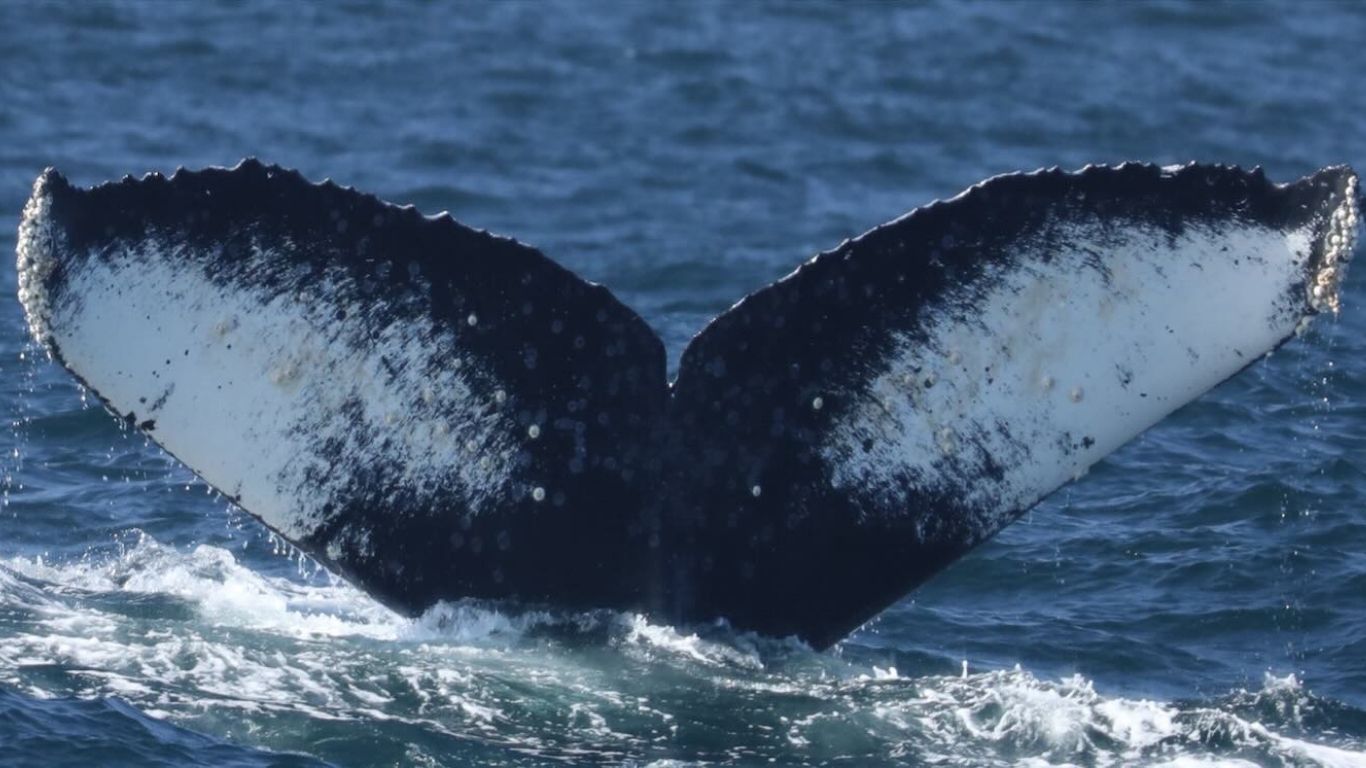
Whale fluking is when a whale raises its tail above the surface before a dive
The large, rounded bumps on a humpback whale’s head and lower jaw are called tubercles. These are actually oversized hair follicles.
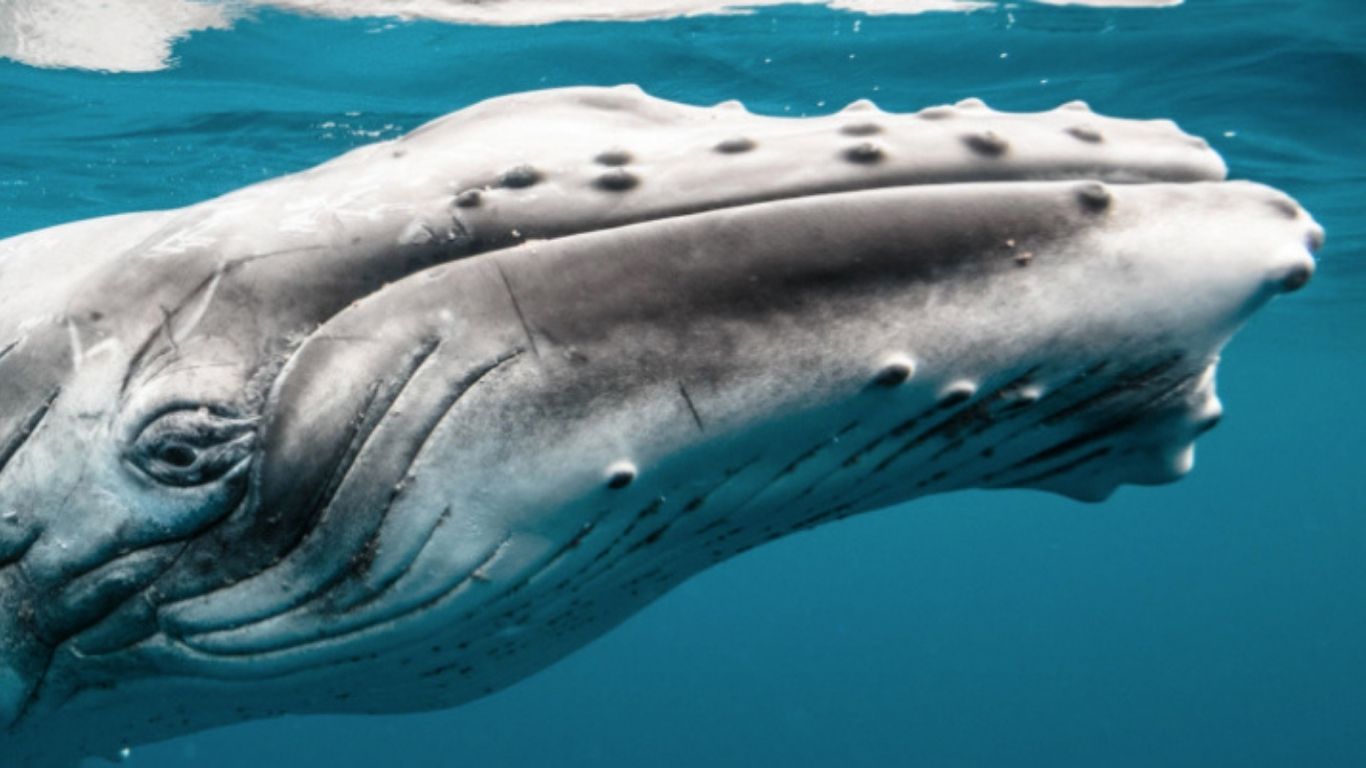
Humpback Whales on average live about 50 years, although there have been indications of much longer lifespans in the species – as much as 100 years in rare cases.
The “hump” in their name refers to the small dorsal fin and the fleshy mound it sits upon. This feature becomes most prominent when the whale arches its back in preparation for a deep dive.
There are an estimated 80,000 Humpback Whales alive today, breaking down in population as:
- 20,000 in the North Pacific
- 12,000 in the North Atlantic
- 50,000+ in the Southern Hemisphere
The only predators Humpback Whales have faced aside from man are thought to be Killer Whales.

Humpback whale breaching is when the whale jumps partially or completely out of the water